Saqib's work has long centred on questions of power and development against a background of heterodoxy. A scholar, strategist and businessman, he has spent more than three decades examining how political and economic decisions shape the world, and how differently those decisions are understood across countries.
He holds a PhD from the London School of Economics, where he is a Visiting Fellow and Director of Pakistan 2047, and has written three books on Islam, strategy and democracy. Having lived in London, Dubai and Toronto, with extended periods in Lahore and San Diego, he has seen how debates about climate change, governance and development change depending on where they take place and whose interests are involved.
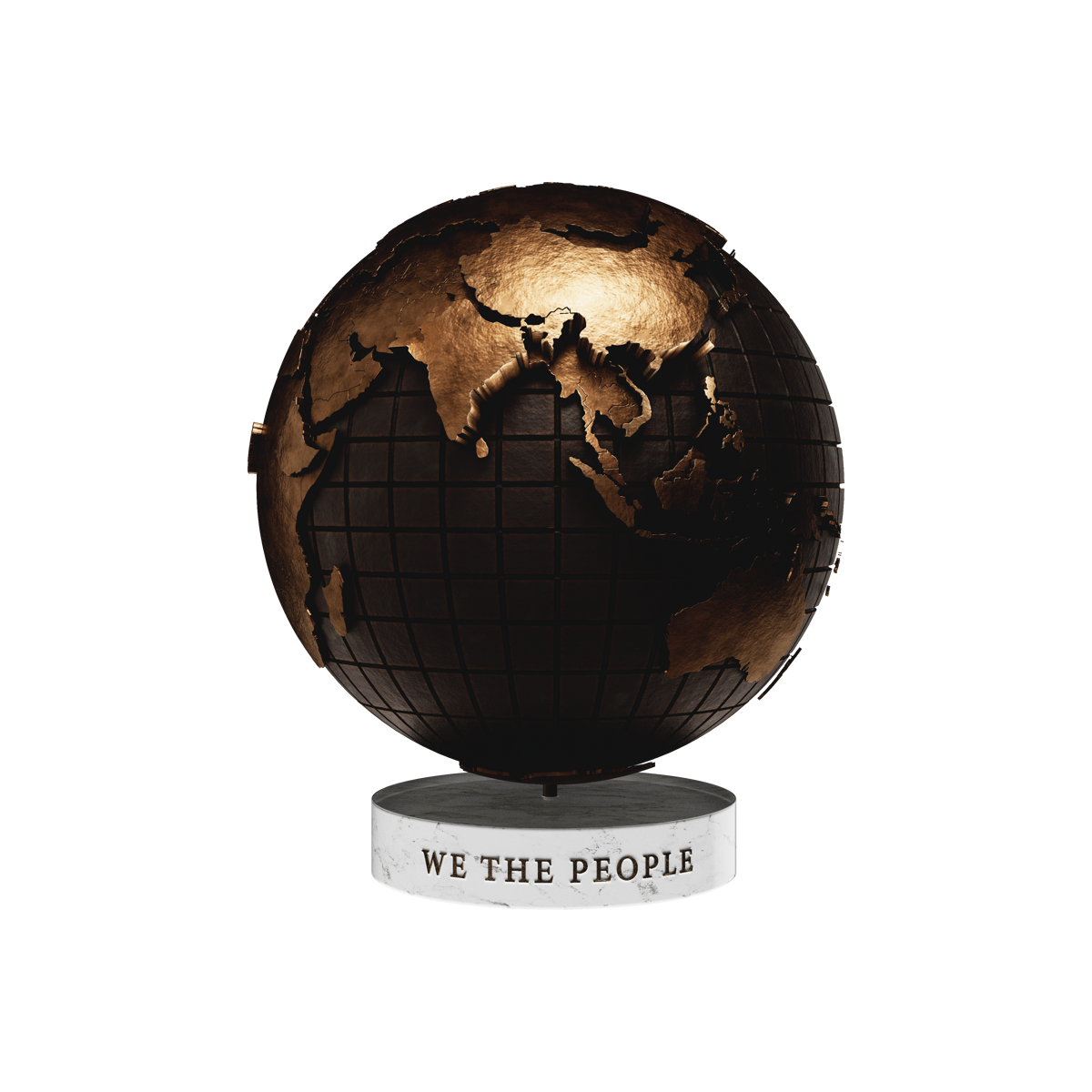
We The People raises one of the most important questions of our time: who does the world really represent? The sculpture gives physical form to the distribution of humanity, revealing the striking imbalance between population and power. More than half the world's population lives in Asia, yet its population barely determines the tides of global affairs.
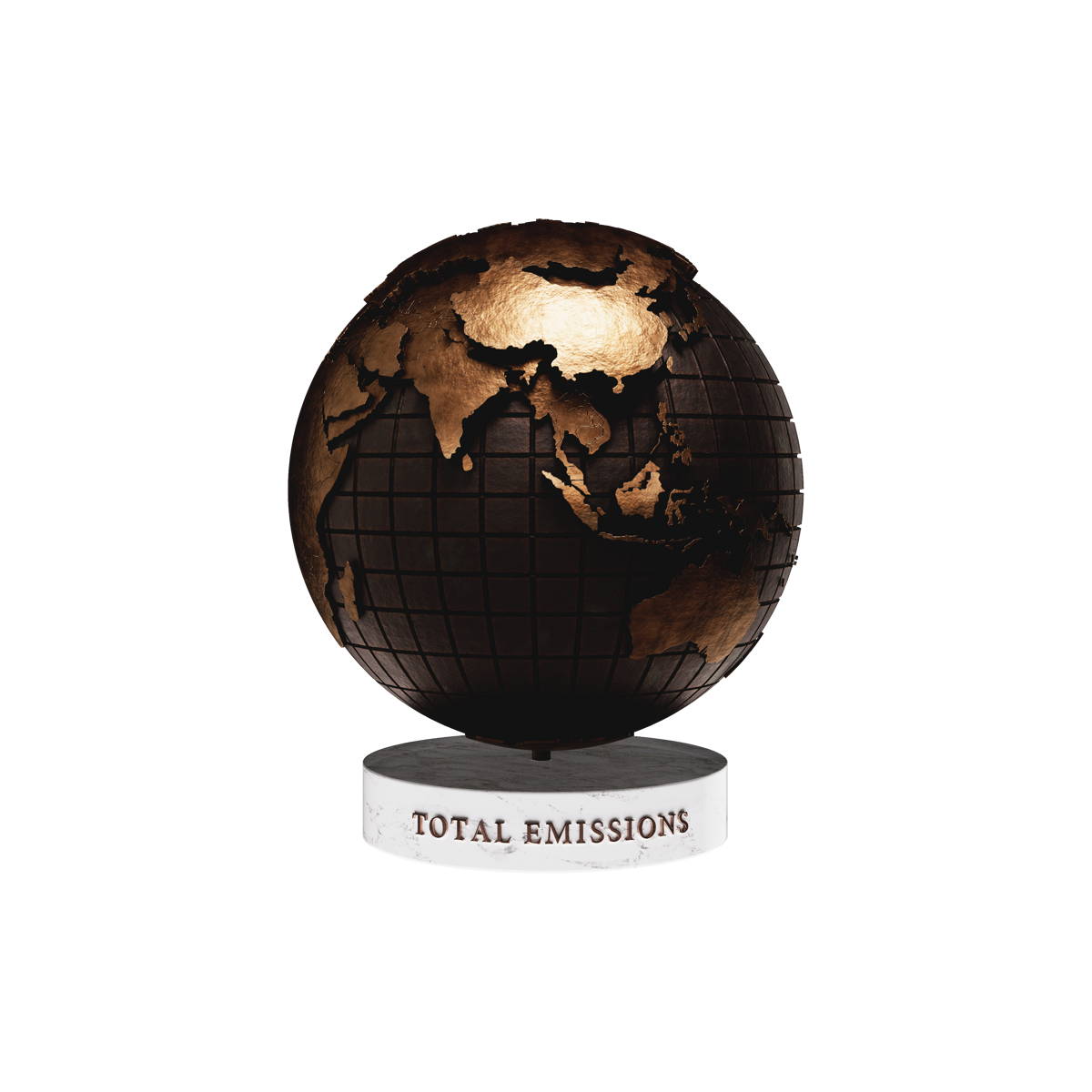
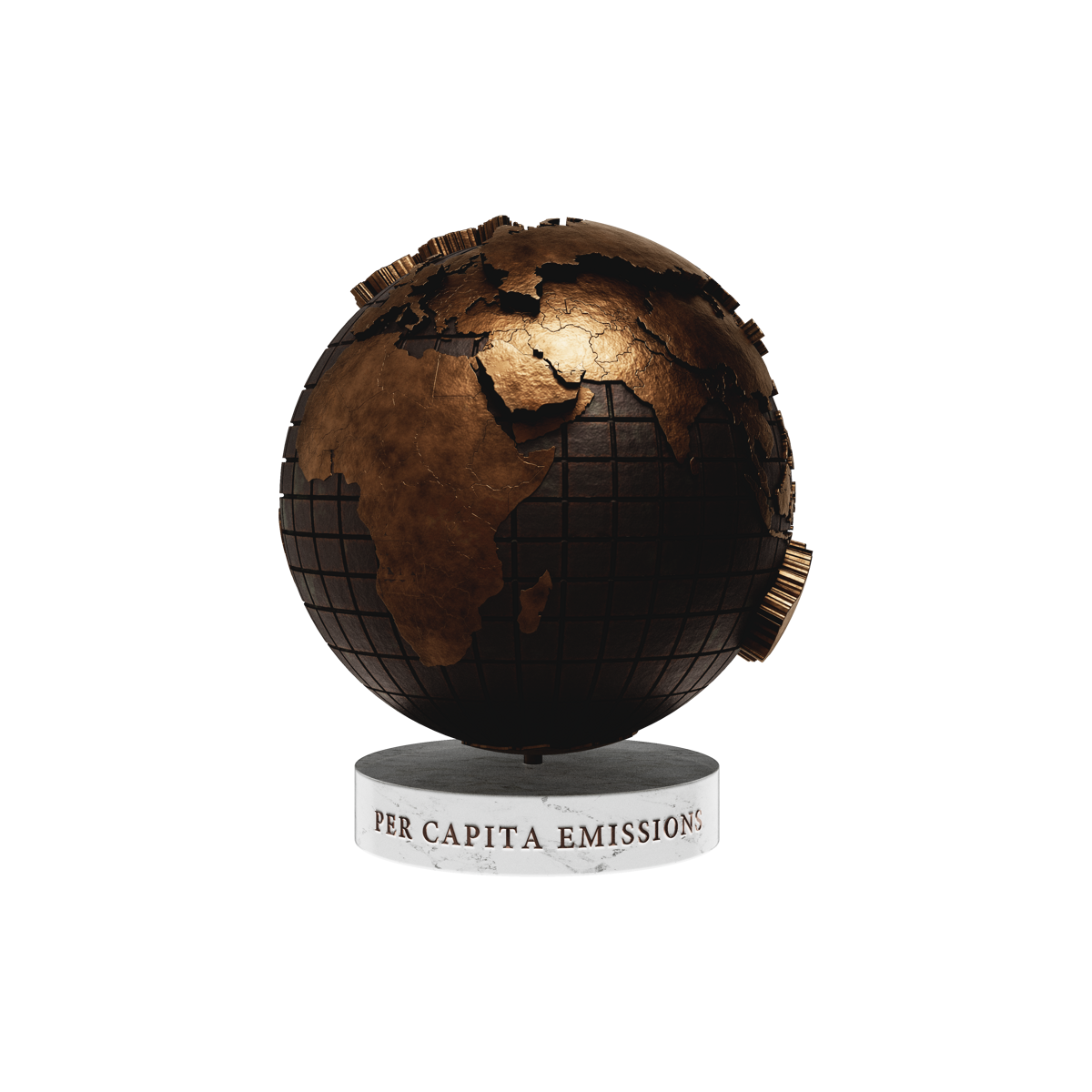
The distinction between the two sculptures Total Emissions and Per Capita Emissions captures another tension. Who bears responsibility for the world’s pollution? Who gets to industrialise? Whose development is regulated? Saqib gives physical form to this debate, the sculptures invite its audience to consider the implications.
These three sculptures bring together interests that have occupied much of Saqib’s adult life. Unlike reports and statistics through which these debates are usually presented, bronze doesn't negotiate.
Transforming global data into sculptural form, each work is conceived as both an object of beauty and a point of conversation, particularly for those with an interest in international affairs, the environment and the conversations that influence our changing economic and political world.